Cash caps the night at what’s in his wallet. Cashless opens it up to what’s in his account.
Every guy on your floor spends up to what he thinks he can spend. With cash, that number is whatever he walked in with — a couple hundred on a good night. With Apple Pay, Google Pay, or his card, the number is whatever he actually has. Same customer, bigger ceiling.
- Works with cash
- No app for your customers
- Every payment tagged to you
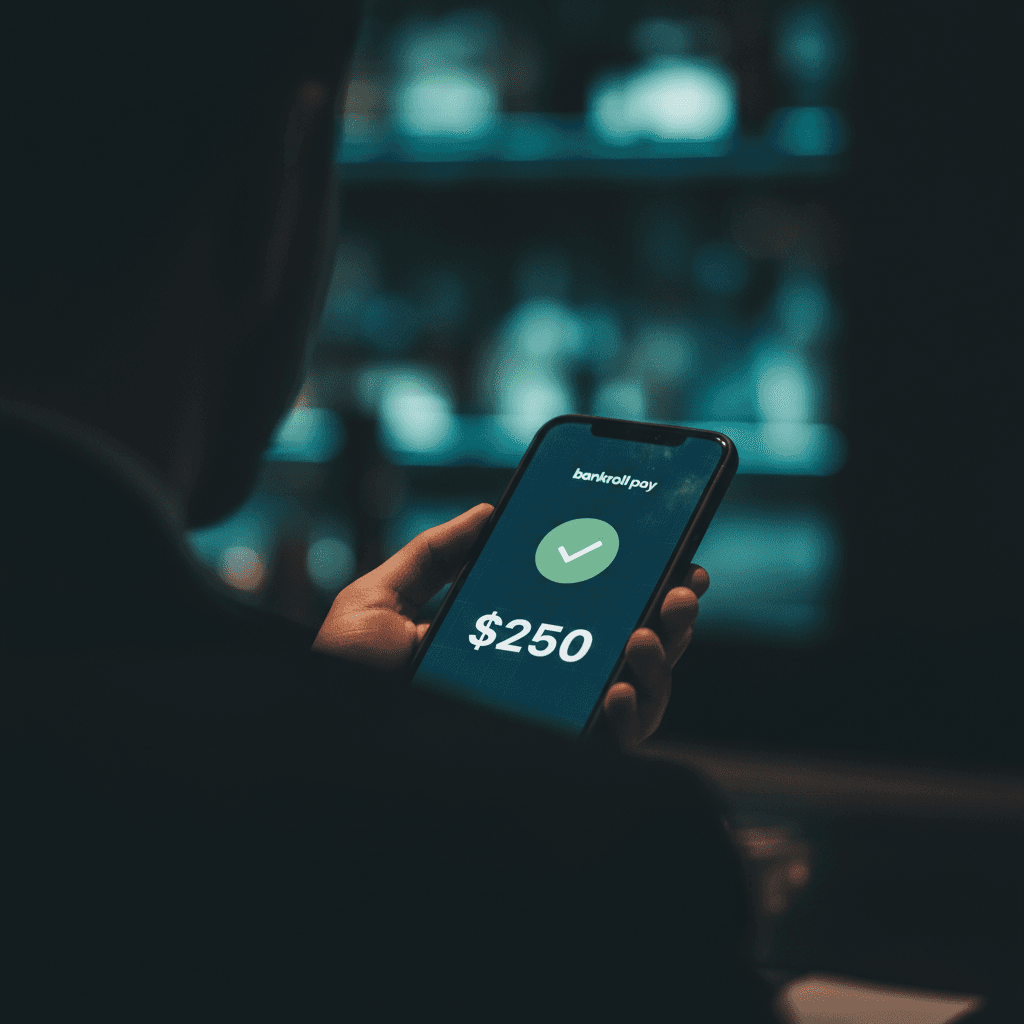
What changes when his wallet stops deciding for him.
Three situations every shift runs into. Cash version, card version, and what changes about your night when the ceiling moves.
Table of four wants VIP. Cash version: they pool what they've got, come up short, the round shrinks to bottle service. Card version: one guy taps, covers it, settles later. The upsell actually happens.
He came in with forty in his pocket. The song hit and he wanted to tip a hundred. Cash says no. His phone says yes — he scans, enters the number he actually meant.
He's out of cash. Old move: call it a night, or run to the ATM and not come back. New move: QR pulls straight from his account. He stays on the floor. You keep going.
The spend range cashless-capable venues see on top of cash-only baseline (Fiserv). On your shift, that's real dollars per hour.
That number isn’t a marketing claim. It’s what venues measure when the ceiling stops being whatever a customer walked in with.
Three taps. Less explaining, not more.
The same three states your customer flies through. You see them land in the same two seconds he does.

Point camera at QR code
Your whole night is already on the screen.
Every QR payment, chip redemption, and tip tagged to you is logged with a timestamp. When you check out with your manager, it’s a list — not a conversation. No trying to remember who paid what at the end of a twelve-hour shift.
A dedicated view on your phone is on the roadmap. For now, it surfaces at checkout on the floor tablet.
Cash stays on the floor.
Nothing about bankroll pay asks you to stop taking cash. It sits on top of the way you already work — it just means his wallet stops being the cap.
Every payment tagged to you is timestamped the second it happens.
The system writes down what came in, through which rail, at what time, under your name. Clean paper trail if you ever need it — a dispute, your own records, tax season.
Zero are you sure that got rung in conversations at 4am.
If your venue isn’t on bankroll pay yet, it could be.
The fastest way this shows up on your floor is if management hears it from the floor first. Here are three things worth saying.
- The ceiling moves
- Customers spend what's in their wallet, not what's in their account. Cashless moves that ceiling up to what they actually have.
- Cash stays
- It sits on top of cash. Nobody's payout changes. Nobody stops taking bills.
- Cleaner checkout
- Every transaction is tagged and timestamped. Checkout gets faster, disputes mostly disappear.